Tuesday, November 26, 2024

We are now OPEN for Sept 2026 applications! Plus: our selection process, why we're unique

The Creative Writing MA at Edinburgh Napier University in Scotland is now OPEN for applications to join our September 2026 cohort. Full details about our selection process can be found below, but we are already interviewing applicants for our next student cohort!

We have a rolling selection process. If you successfully complete all three stages, we offer you a place within 24 hours of being interviewed by us. That means we usually start wait-listing people from May each year. Some places in the September 2026 cohort are already occupied by students who deferred starting for a year, and the remaining places will fill up fast. The sooner you apply, the better!

What makes our creative writing MA so popular? For a start, we put genre fiction front and centre in our course. If you love science fiction, fantasy, crime, romance, horror, historical or stories for YA readers, many creative writing MFAs and MAs don't want to know - but we embrace great genre writing and people who want to write it.

Another unique focus at Edinburgh Napier is graphic novels and comics, which most programmes ignore. We love this medium so much we devote an entire module about it, Writing Graphic Fiction. [Good news: no talent for drawing required!]

There are no peer review workshops in Creative Writing MA classes at Edinburgh Napier. We encourage students to swap work and feedback - but outside the classroom. Instead of classes focused on peer review workshops, you are encouraged to critically self-reflect on your work [with prompts from us], and to share that thinking. You get professional editorial feedback on your writing and your self-reflection skills, delivered masterclass-style. And you get six hours of one-to-one mentoring.

If that sounds enticing, here's how you apply for our course. Like so much of our programme, the admissions process we use to select students also seems to be unique...


First, you fill in and submit an application form [there are links to an online version top right of this page]. We welcome applicants who already have a degree - it doesn't have to be in English literature or some form of creative writing. We also recognise prior learning and writing experience in those who don't have a degree yet.

The crucial section of your form is the personal statement. This is where you tell us about your aspirations as a writer, and how our programme can help you achieve them. Here's a hint: don't just copy and paste a standard personal statement. We look to see if applicants have done their research on the course and have enthusiasm for our specialisms.

Do your homework and research our programme. If you want your application taken seriously, show us you've taken our course seriously. Remember, your personal statement is also a chance to showcase your ability as a writer. So blow our socks off!

All being well, we'll progress you to stage two of our selection process. We don't expect a writing sample with your application. Instead we'll invite you to undertake a writing challenge for which you'll have a week to create an original short story of up to 500 words. This matches the writing challenges students face many weeks on our MA.

We give you a choice of first sentences. You select one and use that as the opening for your story. We let you decide when to receive the brief, so you can choose a week to suit you. And we include the criteria used to assess your story, so the process is transparent.

Once you've sent in your story, we read and assess it. Some applicants get turned away at this stage - we take roughly one out of every five people who apply. But if your story shows promise, we invite you to an online interview.

The interview lasts up to an hour. During that time we use a teaching and learning activity from the MA to assess you. This also gives you insight into our programme and how we teach. Your interview should be an enjoyable experience, not an interrogation!

We let you know within a day if we're offering you a place - no waiting for months to find out [and no fee to apply, either!]. We use a rolling admissions process: once we're full, we're full. 
 
If you still have any questions, get in touch before you apply. Email programme leader David Bishop here: d.bishop@napier.ac.uk. The sooner you apply, the better your chances...

Thursday, November 23, 2023

We are now OPEN for Sept 2024 applications! Plus: how we select you, what makes us unique

The Creative Writing MA at Edinburgh Napier University in Scotland is now OPEN for applications to join our September 2024 cohort. Full details about our selection process can be found below, but we are already interviewing applicants for our next student cohort!

We have a rolling selection process. If you successfully complete all three stages, we offer you a place within 24 hours of being interviewed by us. That means we usually start wait-listing people from May each year. Some places in the September 2024 cohort are already occupied by students who deferred starting for a year, and the remaining places will fill up fast. The sooner you apply, the better!

What makes our creative writing MA so popular? For a start, we put genre fiction front and centre in our course. If you love science fiction, fantasy, crime, horror, historical or stories for YA readers, many creative writing MFAs and MAs don't want to know - but we embrace great genre writing and people who want to write it.

Another unique focus at Edinburgh Napier is graphic novels and comics, which most programmes ignore. We love this medium so much we devote an entire module about it, Writing Graphic Fiction. [Good news: no talent for drawing required!]

There are no peer review workshops in Creative Writing MA classes at Edinburgh Napier. This boggles the minds of some, as such workshops are the dominant teaching approach for creative writing pretty much everywhere else. We encourage students to swap work and feedback - but outside the classroom.

Instead, you are encouraged to critically self-reflect on your work [with prompts from us], and to share that thinking. You get professional editorial feedback on your writing and your self-reflection skills, delivered masterclass-style in class. And you get six hours of one-to-one mentoring.

If that sounds enticing, here's how you apply for our course. Like so much of our programme, the admissions process we use to select students also seems to be unique...


First, you fill in and submit an application form [there are links to an online version top right of this page]. We welcome applicants who already have a degree - it doesn't have to be in English literature or some form of creative writing. We also recognise prior learning and writing experience in those who don't have a degree yet.

The crucial section of your form is the personal statement. This is where you tell us about your aspirations as a writer, and how our programme can help you achieve them. Here's a hint: don't just copy and paste a standard personal statement. We look to see if applicants have done their research on the course and have enthusiasm for our specialisms.

Do your homework and research our programme. If you want your application taken seriously, show us you've taken our course seriously. Remember, your personal statement is also a chance to showcase your ability as a writer. So blow our socks off!

All being well, we'll progress you to stage two of our selection process. We don't expect a writing sample with your application. Instead we'll invite you to undertake a writing challenge for which you'll have a week to create an original short story of up to 500 words. This matches the writing challenges students face many weeks on our MA.

We give you a choice of first sentences. You select one and use that as the opening for your story. We let you decide when to receive the brief, so you can choose a week to suit you. And we include the criteria used to assess your story, so the process is transparent.

Once you've sent in your story, we read and assess it. Some applicants get turned away at this stage - we take roughly one out of every five people who apply. But if your story shows promise, we invite you to an online interview.

The interview lasts up to an hour. During that time we use a teaching and learning activity from the MA to assess you. This also gives you insight into our programme and how we teach. Your interview should be an enjoyable experience, not an interrogation!

We let you know within a day if we're offering you a place - no waiting for months to find out [and no fee to apply, either!]. We use a rolling admissions process: once we're full, we're full. 
 
If you still have any questions, get in touch before you apply. Email programme leader David Bishop here: d.bishop@napier.ac.uk. The sooner you apply, the better your chances...

Monday, July 31, 2023

We are CLOSED for new applications to join our Sept 2023 MA Creative Writing MA cohort

The MA Creative Writing programme at Edinburgh Napier University is now closed for new applications to join the September 2023 cohort. We re-open in November 2023 for applications to our September 2024 cohort.

You can still apply to our fully online MA Writing Genre Fiction programme. A new cohort is due to start that innovative course of study in January 2024.
You can find out more information about it here.

Watch this space for further updates!

Wednesday, November 16, 2022

We are now OPEN for Sept 2023 applications! Plus: how we select you, what makes us unique

The Creative Writing MA at Edinburgh Napier University in Scotland is now OPEN for applications to join our September 2023 cohort. Full details about our selection process can be found below, but we are already looking at applications for our next student cohort!

We have a rolling selection process. If you successfully complete all three stages, we offer you a place within 24 hours of being interviewed by us. That means we usually start wait-listing people from May each year. Some places in the September 2023 cohort are already occupied by students who deferred starting for a year, and the remaining places will fill up fast. The sooner you apply, the better!

What makes our creative writing MA so popular? For a start, we put genre fiction front and centre in our course. If you love science fiction, fantasy, crime, horror, historical or stories for YA readers, many creative writing MFAs and MAs don't want to know - but we embrace great genre writing and people who want to write it.

Another unique focus at Edinburgh Napier is graphic novels and comics, which most programmes ignore. We love this medium so much we devote an entire module about it, Writing Graphic Fiction. [Good news: no talent for drawing required!]

There are no peer review workshops in Creative Writing MA classes at Edinburgh Napier. This boggles the minds of some, as such workshops are the dominant teaching approach for creative writing pretty much everywhere else. We encourage students to swap work and feedback - but outside the classroom.

Instead, you are encouraged to critically self-reflect on your work [with prompts from us], and to share that thinking. You get professional editorial feedback on your writing and your self-reflection skills, delivered masterclass-style in class. And you get six hours of one-to-one mentoring.

If that sounds enticing, here's how you apply for our course. Like so much of our programme, the admissions process we use to select students also seems to be unique...


First, you fill in and submit an application form [there are links to an online version top right of this page]. We welcome applicants who already have a degree - it doesn't have to be in English literature or some form of creative writing. We also recognise prior learning and writing experience in those who don't have a degree yet.

The crucial section of your form is the personal statement. This is where you tell us about your aspirations as a writer, and how our programme can help you achieve them. Here's a hint: don't just copy and paste a standard personal statement. We look to see if applicants have done their research on the course and have enthusiasm for our specialisms.

Do your homework and research our programme. If you want your application taken seriously, show us you've taken our course seriously. Remember, your personal statement is also a chance to showcase your ability as a writer. So blow our socks off!

All being well, we'll progress you to stage two of our selection process. We don't expect a writing sample with your application. Instead we'll invite you to undertake a writing challenge for which you'll have a week to create an original short story of up to 500 words. This matches the writing challenges students face many weeks on our MA.

We give you a choice of first sentences. You select one and use that as the opening fofor your story. We let you decide when to receive the brief, so you can choose a week to suit you. And we include the criteria used to assess your story, so the process is transparent.

Once you've sent in your story, we read and assess it. Some applicants get turned away at this stage - we take roughly one out of every five people who apply. But if your story shows promise, we invite you to an online interview.

The interview lasts up to an hour. During that time we use a teaching and learning activity from the MA to assess you. This also gives you insight into our programme and how we teach. Your interview should be an enjoyable experience,
not an interrogation!

We let you know within a day if we're offering you a place - no waiting for months to find out [and no fee to apply, either!]. We use a rolling admissions process: once we're full, we're full. 
 
If you still have any questions, get in touch before you apply. Email programme leader David Bishop here: d.bishop@napier.ac.uk. The sooner you apply, the better your chances...

Wednesday, August 3, 2022

We are now CLOSED for new applications to join our MA Creative Writing Sept. '22 cohort


The MA Creative Writing programme at Edinburgh Napier University is now closed for new applications to join the September 2022 cohort. We re-open in November 2022 for those wishing to apply for our September 2023 cohort.

Watch this space for further updates!

Tuesday, March 22, 2022

New memoirs coming from MA Creative Writing graduates Catherine Simpson & Ali Millar

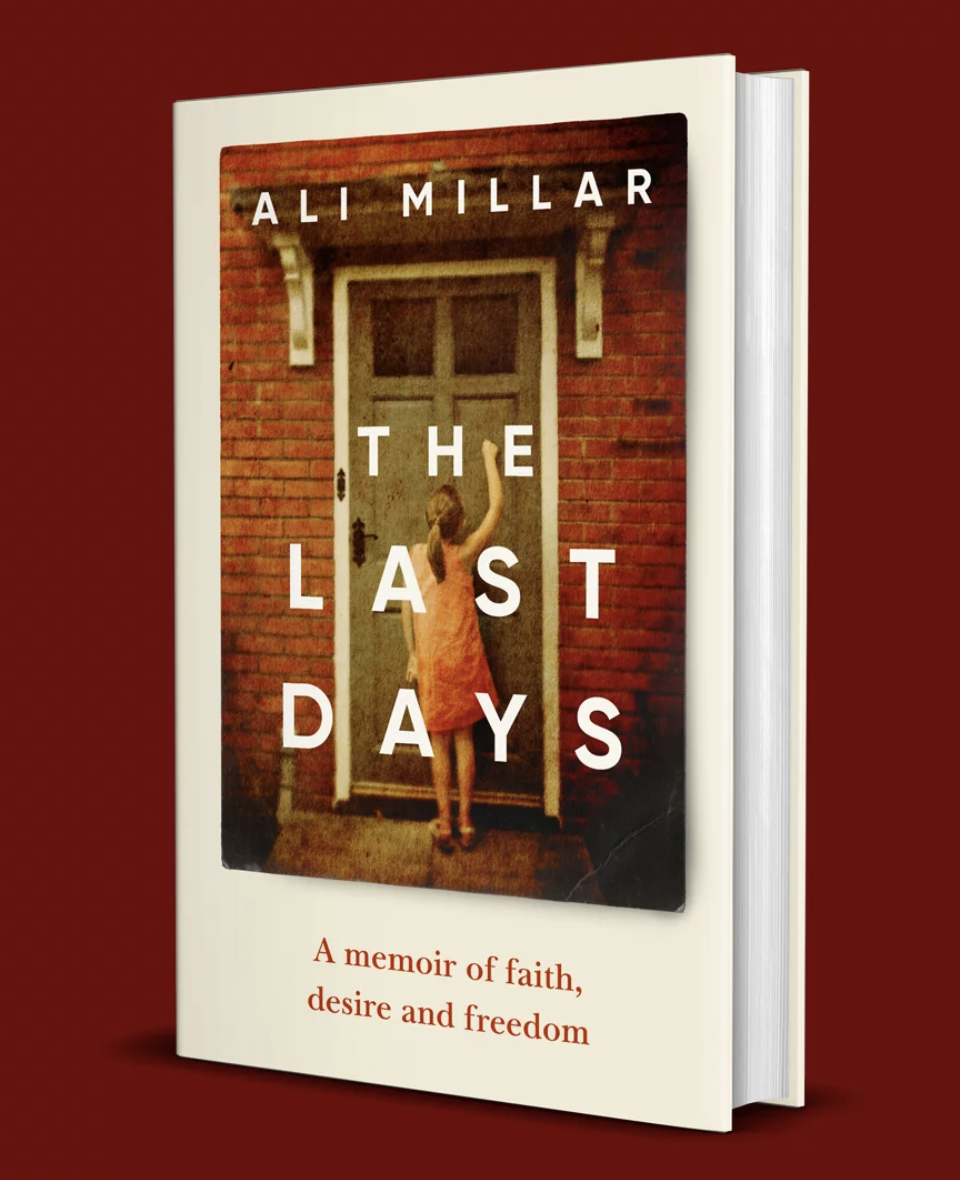
We're delighted that two graduates of the MA Creative Writing programme at Edinburgh Napier University are publishing memoirs this year - One Body by Catherine Simpson (from Saraband Books in April), and The Last Days by Ali Millar (Ebury Press, July).

One Body is described as 'the candid and often darkly funny story of how Catherine navigates her cancer treatment and takes stock of the emotions and reflections it provokes, until she is in remission. She comes to appreciate the skin she is in – to be grateful for her body and all that it does and is.'

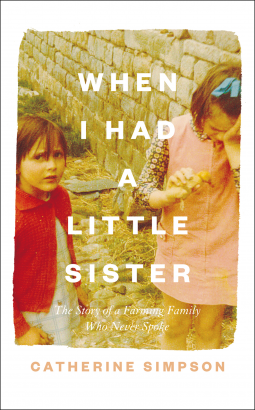
It is Catherine's second volume of memoir, following on from the acclaimed When I Had a Little Sister was published by 4th Estate in 2019 to great acclaim. She received a Scottish Book Trust New Writers Award not long after graduating from the MA, and her debut novel Truestory was published in 2015. She has been published in numerous anthologies and magazines, and been broadcast on BBC Radio.

The Last Days by Ali Millar is described as 'a tale of love and darkness, of faith and absolution ... one woman's courageous journey to freedom from the Jehovah's Witnesses. It is one of the Scotsman's 2022 books to watch.

Since graduating Ali has worked in Edinburgh and London,as a producer and broadcast journalist. The Last Days will be her first published book, exploring a childhood growing up in the shadow of religion. It asks the question, can you escape from the life into which you were born?

Thursday, December 9, 2021

Angry Robot Books publishing second novel by award-winning MA graduate Ever Dundas

Author Ever Dundas
Author Ever Dundas
Acclaimed publisher Angry Robot Books has acquired the second novel by award-winning MA Creative Writing graduate Ever Dundas. The science fiction thriller HellSans will be published in January 2023.

The novel is set in a fictional UK, where HellSans is a ubiquitous typeface, enforced by the government in all communications and in all public spaces as the ultimate control device. The majority of the population experience bliss when they see the typeface, but there’s a minority who are allergic to it. HellSans Allergy Sufferers (HSAs) are persecuted, and live on the streets or in a ghetto on the outskirts of the capital.

HellSans was written as a response to my experience as a disabled person in Tory austerity UK,' Dundas explains. 'When the pandemic hit, everyone talked about suddenly existing in a dystopia, but disabled people had already been living a dystopia of stigma and discrimination for over a decade. HellSans is first and foremost a science fiction thriller but also reflection of that experience.'

Dundas won the Saltire First Book of the Year Award for debut novel Goblin, which was their Major Project while studying on the Creative Writing MA programme at Edinburgh Napier University. 

HellSans was acquired by Angry robot editor Simon Spanton who describes the novel as fierce, fast and fun. 'It shines a bright light on how society works against the marginalised. Passionate but never preachy, HellSans does exactly what SF does best: makes you think about how things are and how things could be. Being able to welcome Ever, such an active and involved voice in so many parts of the Scottish publishing scene, to Angry Robot is a really exciting development for us.'

Wednesday, November 17, 2021

Oneworld buys debut novel from MA Creative Writing graduate Pim Wangtechawat!

Great news today as UK publisher Oneworld has scooped the debut novel by Thai-Chinese writer Pim Wangtechawat, a recent graduate of our MA Creative Writing programme. 

The Moon Represents My Heart was acquired in a two-book deal and will be published as the super-lead title in spring 2023. Italian rights have also been sold to publisher Keller Editore.The novel was Pim's major project while she was studying at Edinburgh Napier University from 2019-20,

The Moon Represents My Heart follows the generations of a British-Chinese family of time travellers. When Tommy’s parents time-travel and never return, time stands still. But as everyone begins to move forward, Tommy is stuck in the past which has ramifications for his life in the present. The Moon Represents My Heart is described as "a story about relationships between parent and child, whether one can accept the choices of the other, and whether they would make the same decision again".

Publisher Juliet Mabey told trade industry weekly The Bookseller that "Pim has written a truly heart-warming, richly poetic novel, brimming with tenderness, joy and loss, and I found myself rooting for each character in this immersive, multivocal time-travelling novel. Sitting in that wonderful sweet spot between literary and upmarket fiction, I’m incredibly excited to be able to include it in the launch list for our new commercial fiction imprint here at Oneworld.”

Earlier this year Pim signed with literary agent Liza DeBlock at Mushens Entertainment. "I absolutely loved The Moon Represents My Heart and Pim’s writing is gorgeous,' says DeBlock. "I laughed, I cried, and this story made me relive every best day of my life.”

"I’m beyond excited that The Moon Represents My Heart — a deeply personal debut inspired by my Chinese heritage — has found the perfect home," Pim told The Bookseller. "As an author from Bangkok writing in my second language, it is a lifelong dream to have my novel published!"

The whole Creative Writing team at Edinburgh Napier University congratulates Pim on her success, and we can't wait to read the finished novel when it is published in 2023. Time travel, family heartbreak and a surprise cameo by a famous martial arts star - it's going to be epic!

We are now OPEN for Sept 2022 applications! Plus: how we select you, what makes us unique

The Creative Writing MA at Edinburgh Napier University in Scotland is now OPEN for applications to join our September 2022 cohort. Full details about our selection process can be found below, but we are already looking at applications for our next student cohort!

We have a rolling selection process. If you successfully complete all three stages, we offer you a place within 24 hours of being interviewed by us. That means we usually start wait-listing people from May each year. Some places are already occupied in the September 2022 cohort by students who deferred starting for a year due to the pandemic. That means the remaining places are likely to fill up fast. The sooner you apply, the better!

That's especially true for part-time applicants. We only take four or five new part-time students each year, and we've already got people with deferred part-time offers for September 2022. So if you're thinking of applying as a part-time student, do not delay.

What makes our creative writing MA so popular? For a start, we put genre fiction front and centre in our course. If you love science fiction, fantasy, crime, horror or historical, many creative writing MFAs and MAs don't want to know - but we embrace great genre writing and people who want to write it.

Another unique focus at Edinburgh Napier is graphic novels and comics, which most programmes ignore. We love this medium so much we devote an entire module about it, Writing Graphic Fiction. [Good news: no talent for drawing required!] We also offer a special focus on Young Adult fiction.

Edinburgh Napier's creative writing MA does not have a poetry option. I repeat, we do not teach poetry. There are many great courses with brilliant poets on their faculty - if you want to study poetry, seek those out. We have had prize-winning poets as students on our programme, but we don't teach poetry.

There are no peer review workshops in Creative Writing MA classes at Edinburgh Napier. I repeat, no peer review workshops. This boggles the mind of some people, as such workshops are the dominant teaching style for creative writing pretty much everywhere else. But we don't have them in our classes. 

Instead, you are encouraged to critically self-reflect on your work [with prompts from us], and to share that thinking. You get professional editorial feedback on your writing and your self-reflection skills, delivered masterclass-style in class. And you get six hours of one-to-one mentoring.

If that sounds enticing, here's how you apply for our course. Like so much of our programme, the admissions process we use to select students also seems to be unique...


First, you fill in and submit an application form [there are links to an online version top right of this page]. We welcome applicants who already have a degree - it doesn't have to be in English, English literature or some form of creative writing. We also recognise prior learning and writing experience in those who don't have a degree yet.

The crucial section of your form is the personal statement. This is where you tell us about your aspirations as a writer, and why our programme can help. Here's a hint: don't just copy and paste in your usual personal statement. We look to see if applicants have done their research on the course and have enthusiasm for our specialisms.

Do your homework and research our programme. Read the other entries on this blog. If you want your application taken seriously, show us you've taken our course seriously. Remember, your personal statement is also a chance to showcase your ability as a writer. So blow our socks off!

All being well, we'll progress you to the next stage of our selection process. We don't expect a writing sample with your application. Instead we'll invite you to undertake a writing challenge. We ask you to write us an original short story of up to 500 words, and you'll have a week to submit. This matches the writing challenges students face many weeks on our MA.

We give you a choice of first sentences. You select one and use that as the opening for your story. We let you decide when to receive the brief, so you can choose a week to suit you. And we include the criteria used to assess your story, so the process is transparent.

Once you've sent in your story, we read and assess it. Some applicants get turned away at this stage - we take roughly one out of every five people who apply. But if your story shows promise, we will invite you to an online interview.

The interview lasts up to an hour. During that time we use a teaching and learning activity from our course to assess you. This also gives you insight into our programme and how we teach. Your interview should be an enjoyable experience, and not an interrogation!

We let you know within a day if we're offering you a place - no waiting for months to find out [and no fee to apply, either!]. We use a rolling admissions process: once we're full, we're full. 
 
If you still have any questions, get in touch before you apply. Email programme leader David Bishop here: d.bishop@napier.ac.uk. The sooner you apply, the better your chances...
Tuesday, August 17, 2021

Closed for 2021 applications, but we re-open for 2022 applications on November 1st, 2021

We are now closed to applications from anyone seeking to join our September 2021 intake. The MA Creative Writing programme at Edinburgh Napier University is officially full for this coming academic year, with our incoming students already doing prep work before joining us next month.

We re-open on November 1st 2021 for applications to join our September 2022 intake [links at the top of the column on the right]. There are already several students with deferred offers for next year, so we would encourage those interested in applying to do so well before Easter 2022.

Monday, October 26, 2020

We are now OPEN for Sept 2021 applications! Plus: how we select you, what makes us unique

The Creative Writing MA at Edinburgh Napier University in Scotland is now OPEN for applications to join our September 2021 cohort. Full details about our selection process can be found further down this blogpost, but we have already started looking at applications for our next student cohort.


We have a rolling selection process. If you successfully complete all three stages, we will offer you a place within 24 hours of being interviewed by us. That means we usually start wait-listing people from May each year. So if you're thinking of applying, sooner is better.

Half a dozen students who had offers for September 2020 opted to defer their start for a year due to the Covid-19 pandemic. That means we already have a few seats occupied for the 2021-22 cohort, so places are likely to fill up fast. The sooner you apply, the better!

That's especially true for part-time applicants. We only take four or five new part-time students each year, and we've already got two people with deferred part-time offers for September 2021. So if you're thinking of applying as a part-time student, do not delay.

What makes our creative writing MA so popular? For a start, we put genre fiction front and centre in our course. If you love science fiction, fantasy, crime or horror, many creative writing MFAs and MAs don't want to know - but we embrace great genre writing and people who want to write it.

Another unique focus at Edinburgh Napier is graphic novels and comics, which most programmes ignore. We love this medium so much we devote an entire module about it, Writing Graphic Fiction. [Good news: no talent for drawing required!] We also specialise in Young Adult fiction, with acclaimed YA author Laura Lam leading a great module on this.

Edinburgh Napier's creative writing MA does not offer a poetry option. I repeat, we do not teach poetry. There are plenty of great courses with brilliant poets on their faculty - if you want to study poetry, seek those out. We have had prize-winning poets as students on our programme, but we don't teach or critique poetry.

There are no peer review workshops in Creative Writing MA classes at Edinburgh Napier. I repeat, no peer review workshops. This boggles the mind of some people, as such workshops are the dominant teaching style for creative writing pretty much everywhere else. But we don't have them in our classes. 

Instead, you are encouraged to critically self-reflect on your work [with prompts from us], and to share that thinking. You get professional editorial feedback on your writing and your self-reflection skills, delivered masterclass-style in class. And you get six hours of one-to-one mentoring.

If that sounds enticing, here's how you apply for our course. Like so much of our programme, the admissions process we use to select students also seems to be unique...


First, you fill in and submit an application form [there are links to an online version top right of this page]. We welcome applicants who already have a degree - it doesn't have to be in English, English literature or some form of creative writing. We also recognise prior learning and writing experience in those who don't have a degree yet.

The crucial section of your form is the personal statement. This is where you tell us about your aspirations as a writer, and why our programme can help. Here's a hint: don't just copy and paste in your usual personal statement. We look to see if applicants have done their research on the course and have enthusiasm for our specialisms.

Do your homework and research our programme. Read the other entries on this blog. If you want your application taken seriously, show us you've taken our course seriously. Remember, your personal statement is also a chance to showcase your ability as a writer. So blow our socks off!

All being well, we'll progress you to the next stage of our selection process. We don't expect a writing sample with your application. Instead we'll invite you to undertake a writing challenge. We ask you to write us an original short story of up to 500 words, and you'll have a week to submit. This matches the writing challenges students face many weeks on our MA.

We give you a choice of first sentences. You select one and use that as the opening for your story. We let you decide when to receive the brief, so you can choose a week to suit you. And we include the criteria used to assess your story, so the process is transparent.

Once you've sent in your story, we read and assess it. Some applicants get turned away at this stage - we take roughly one out of every five people who apply. But if your story shows promise, we will invite you to an interview - via Skype, thanks to the pandemic.

The interview lasts up to an hour. During that time we use a teaching and learning activity from our course to assess you. This also gives you insight into our programme and how we teach. Your interview should be an enjoyable experience, and not an interrogation!

We let you know within a day if we're offering you a place - no waiting for months to find out [and no fee to apply, either!]. We use a rolling admissions process: once we're full, we're full. Our course takes a maximum of 18 full-time students a year, and up to four  or five part-timers who are with us for two years.

If you still have any questions, get in touch before you apply. Email programme leader David Bishop here: d.bishop@napier.ac.uk. The sooner you apply, the better your chances...

Friday, June 12, 2020

MA graduate's Major Project longlisted for Myriad First Graphic Novel Competition

We're delighted that MA Creative Writing graduate Lesley MacNiven has been longlisted for the presitigious Myriad First Graphic Novel Competition with her major project, This Woman's Work.

Lesley devised the narrative while studying for her MA at Edinburgh Napier University and its was the creative capstone of her time on the programme. She has continued to develop it, collaborating with artist Heather Charters on their entry for Myriad.

'I am ecstatic our project has been longlisted in the Myriad First Graphic Novel Competition,' Lesley wrote on Twitter, praising 'mega talented' artist Heather Charters. 'Keep everything crossed we make the shortlist.'

This Woman's Work is a documentary comic designed to inspire action and drive change in furthering gender equality. It examines how the workplace was not designed for women, and how women’s lives have been affected by that. [There's a full page from the project further down this blogpost.]

The graphic novel competition offers the winner(s) an opportunity to have their completed work  published by Myriad Editions. It's a unique opportunity for creators to see their debut graphic novel in print, furthering Myriad’s mission to encourage and nurture new talent.

Myriad has published the graphic novels submitted by first two competitions winners - Gareth Brookes (2012) and Jade Sarson (2014), with the 2018 winner Jenny Robins due to have her graphic novel published next year. Myriad has also published four  shortlisted authors from past years, as well as work by other creators who entered the competition.

The shortlist is due to be announced by the end of this month. We'll be keeping everything crossed for Lesley and Heather, but making the longlist is a massive achievement whatever happens!

This Woman's Work @ Lesley MacNiven & Heather Charters

Monday, March 2, 2020

Edinburgh Napier University will be @ AWP 2020 in San Antonio, Texas this week!

Our MA Creative Writing programme leader David Bishop will be at the AWP (Association of Writers and Writing Programs) Conference & Bookfair in Texas this week. He will be greeting visitors at Bookfair Table T1920 inside the Henry B. González Convention Center on Thursday March 5th, Friday March 6th and Saturday March 7th.

Edinburgh Napier University is sharing the table with Seton Hill University, our partners for a new International MA/MFA dual degree in Writing Popular Fiction. David will be plugging ENU's unique programme, which has attracted dozens of American students to Scotland since 2010.

To contact David & AWP, the fastest way is via Twitter: @davidbishop

Saturday, February 8, 2020

Debut novel by MA Creative Writing alumni Jemma Wallace out soon, other success stories

This month sees the launch of The Truth About My Mother, the debut novel by Edinburgh Napier University MA Creative Writing alumni Jemma Wallace. Publisher Trapeze Books describes it as 'a sweeping family drama about secrets, sacrifice and love, spanning from the 1950s to present day.'

Two years ago Jemma won the ‘One in Four’ competition for a new writer with single parent background, securing a £10,000 contract in the process. Now her debut novel is being published on February 20th, with a special launch event at Blackwells in Edinburgh on Thursday February 25th.

The Truth About My Mother was inspired in part by Jemma's experience of single parenthood and her grandmothers experience of being a single mother in the 1950s. Here's the official blurb for it:
All families have secrets, don’t they?
89-year-old Jeannette never meant to keep the truth from her family. But when a near fatal fall sends her to live with her granddaughter Amy, she finds herself revisiting a past that’s been hidden for too many years.
Amy, however, has always been good at keeping secrets. When ex-partner Nick shows up, she’s forced to admit that some things just can’t stay hidden forever.
Judith is starting from scratch – again. The master of reinvention, Amy’s mother has been seeking happiness in all the wrong places. This time though, she might just find it a lot closer to home than she ever believed she would…
As Jeannette’s 90th birthday party approaches, all three women discover they have more in common than they first thought, and the secrets from the past may be the key to unlocking the future.
Three women. Three generations. One legacy...
Two more of our alumni have books coming out soon. British Fantasy Award-winning author Georgina Bruce has written a new horror novella called Honeybones, which is being published by TTA Press, home of acclaimed fiction monthlies Interzone and Black Static. 

Honeybones is the second tome from this writer, following her short story collection This House of Wounds, which was unleashed by Undertow to considerable acclaim last summer.

Across the Atlantic publisher Little, Brown is preparing to launch the sixth book by another of our MA Creative Writing graduates, Katrina Leno. 


Horrid is being described as 'a haunting contemporary horror novel that explores themes of mental illness, rage, and grief, twisted with spine-chilling elements of Stephen King and Agatha Christie.' Here's the full blurb for this September 2020 title:
Following her father's death, Jane North-Robinson and her mom move from sunny California to the dreary, dilapidated old house in Maine where her mother grew up. All they want is a fresh start, but behind North Manor's doors lurks a history that leaves them feeling more alone...and more tormented.

As the cold New England autumn arrives, and Jane settles in to her new home, she finds solace in old books and memories of her dad. She steadily begins making new friends, but also faces bullying from the resident "bad seed," struggling to tamp down her own worst nature in response. Jane's mom also seems to be spiraling with the return of her childhood home, but she won't reveal why. Then Jane discovers that the "storage room" her mom has kept locked isn't for storage at all--it's a little girl's bedroom, left untouched for years and not quite as empty of inhabitants as it appears....

Is it grief? Mental illness? Or something more...horrid?

Friday, November 15, 2019

Success stories: MA Creative Writing graduate Ali Millar signs with London literary agency

In this guest post, Ali Millar writes about her journey to being represented by a top London agent:

I recently signed to literary agency Rogers, Coleridge & White, seven years after graduating from Edinburgh Napier’s Creative Writing MA. It’s an agency I’ve dreamt of joining, but it was the kind of dream I kept on the quiet, the kind of thing that happens to other people.

Although ostensibly the manuscript I’ve just finished doesn’t have much to do with what I worked on during the MA, dig a little deeper and it’s got everything to do with it. Before I started the MA I’d written a pretty dire manuscript, so I knew I could write to length. But I didn’t know anything about plot, structure or pacing - I didn’t know how to tell a story. The MA taught me everything I needed to know about storytelling, and then, when I did the elective creative non-fiction module*, I learnt how to bring all those storytelling skills and apply them to non-fiction, where my passion  lies.

The most valuable thing I learnt on the MA was that writing is work, and hard work at that. It’s not a case of waiting for the muse to strike or for inspiration to appear. It’s sitting down and planning a piece of work, and working at it until it’s finished, and then reworking it until it’s readable, and then probably reworking it again. It is, to paraphrase Margaret Atwood, a word after a word after a word, until it’s done.

Shortly after graduating I gave birth to my first son, and over the next five years had two more children. I moved house four times and country once. I interviewed some of the world’s top authors and chaired at the Edinburgh International Book Festival. I helped to produce a film festival.

But all the while I kept writing, and kept dealing with rejection - badly at first, less badly as the rejections become more encouraging, until finally there was a yes. Without the MA I wouldn’t have had the professional skills needed to keep going and I’m eternally grateful for the time spent at Edinburgh Napier, and still slightly envious of students immersed in worlds of their own making.

*Edinburgh Napier's Creative Writing MA no longer has a creative non-fiction module, but it offers options in writing genre fiction, young adult fiction, comics and graphic novels, interactive media and writing for the screen. Core professionals skills remain at the heart of our programme!

Friday, May 17, 2019

Edinburgh Napier lecturer Daniel Shand gets shortlisted for presitigous 2019 Encore Award

Massive congratulations to our MA Creative Writing team member Daniel Shand, whose latest book Crocodile has just been shortlisted for the prestigious Encore Award.

First presented in 1990, the Encore Award celebrates outstanding second novels with the winner receiving £10,000. Joining Daniel's novel Crocodile on the 2019 shortlist are Perfidious Albion by Sam Byers; Gamble by Kerry Hadley-Pryce; Kitch by Anthony Joseph; Normal People by Sally Rooney; and Jott by Sam Thompson. Award judge Edmund Gordon had this to say:
In Crocodile, Daniel Shand has created some of the most hauntingly damaged characters I’ve encountered for a long time. This is a riveting, heart-breaking, consistently unpredictable novel by an enormously gifted young writer.
Published by Sandstone Press, Crocodile is set in the summer before Chloe goes to high school and she’s been sent to her grandparents because her mother can’t cope. At first, all Chloe wants is to go home, but when she falls in with a feral gang of local boys, life takes a darker turn. By the time summer ends, Chloe will have learned where the greater danger lies.

The winner of the 2019 Encore Award will be announced on Thursday 13 June. Past recipients of the prize administered by the Royal Society of Literature include Colm Tóibín, Ali Smith, and Neel Mukherjee.

Monday, May 13, 2019

Success on page and stage for MA Creative Writing graduates from Edinburgh Napier

We're always delighted to see graduates from our Creative Writing MA getting noticed, and this month has already brought a trinity of success stories from alumni of the programme, spanning page and stage.

Anna Ibbotson's short story Do No Harm has been selected for the Best of British Science Fiction 2018 anthology being published next month by Newcon Press. Her work will be rubbing shoulders with stories by acclaimed and best-selling SF authors such as Alistair Reynolds, Aliya Whiteley and Lavie Tidhar.

Anna's story was first published in Shoreline of Infinity issue 11, but was originally written for an assessment on the MA. 'It was written as part of the genre fiction module,' Anna recalled on Twitter last week, 'and the feedback as part of that made it infinitely stronger!'

Crime fiction is another area when alumni have been making their mark. Each May the Crime Writers' Association announces longlists for its prestigious Dagger Awards at Crimefest in Bristol, and this year's longlists include a graduate of Edinburgh Napier's programme.

Mairi Campbell-Jack is one of ten writers longlisted for the 2019 Debut Dagger, for the opening of a crime novel by an author without a traditional publishing contract. Her book is the wittily entitled Self-Help for Serial Killers: Let Your Creativity Bloom.

She says completing the MA was an important step on her writing journey: 'I used so much of the learning in writing the synopsis and constructing the plot, used a character from my major project and more.' The Dagger Award shortlists are announced in the summer, we'll keep our fingers crossed.

Grant O'Rourke on stage in Jocky Wilson Said
But graduate success is not always on the page. This week the celebrated A Play, A Pie and A Pint theatre season at Oran Mor in Glasgow features a revival of Jocky Wilson Said, a play written by MA Creative Writing graduate Jane Livingstone and her sibling Jonathan Cairney.

The one-man play celebrates legendary Scottish darts champion Jocky Wilson, brought back to life on stage by Outlander actor Grant O'Rourke. The play is one of three Jane has written for A Play, A Pie and A Pint, but her successes haven't stopped there.

She is among the writers chosen for the Scottish Voices development drama group by the BBC writersroom. She had two scripts optioned last year, and another play commissioned, all while being a director of the Outwith Festival in Dunfermline.

Massive congratulations to all three of these alumni!

Monday, February 25, 2019

Selection process for MA Creative Writing at Edinburgh Napier University 2019-20

Unique is a great way to describe our creative writing MA at Edinburgh Napier University in Scotland. For a start, we put genre fiction front and centre in our course. If you love science fiction, fantasy, crime or horror, many creative writing MFAs and MAs don't want to know - but we embrace great genre writing and people who want to write it.

Another unique focus at Edinburgh Napier is graphic novels and comics, which most programmes ignore. We love this medium so much we devote an entire module about it, Writing Graphic Fiction. [Good news: no talent for drawing required!] We also specialise in Young Adult fiction, with acclaimed YA author Laura Lam leading a great module on this.

Edinburgh Napier's creative writing MA does not offer a poetry option. I repeat, we do not teach poetry. There are plenty of great courses with brilliant poets on their faculty - if you want to study poetry, seek those out. We have had prize-winning poets as students on our programme, but we don't teach or critique poetry.

There are no peer review workshops in Creative Writing MA classes at Edinburgh Napier. I repeat, no peer review workshops. This boggles the mind of some people, as such workshops are the dominant teaching style for creative writing pretty much everywhere else. But we don't have them in our classes. Not one!

Instead, you are encouraged to critically self-reflect on your work [with prompts from us], and to share that thinking. You get professional editorial feedback on your writing and your self-reflection skills, delivered masterclass-style in class. And you get six hours of one-to-one mentoring.

If that sounds enticing, here's how you apply for our course. Like so much of our programme, the admissions process we use to select students also seems to be unique...


First, you fill in and submit an application form [there are links to an online version top right of this page]. We welcome applicants who already have a degree - it doesn't have to be in English, English literature or some form of creative writing. We also recognise prior learning and writing experience in those who don't have a degree yet.

The crucial section of your form is the personal statement. This is where you tell us about your aspirations as a writer, and why our programme can help. Here's a hint: don't just copy and paste in your usual personal statement. We look to see if applicants have done their research on the course and have enthusiasm for our specialisms.

Do your homework and research our programme. Read the other entries on this blog. If you want your application taken seriously, show us you've taken our course seriously. Remember, your personal statement is also a chance to showcase your ability as a writer. So blow our socks off!

All being well, we'll progress you to the next stage of our selection process. We don't expect a writing sample with your application. Instead we'll invite you to undertake a writing challenge. We ask you to write us an original short story of up to 500 words, and you'll have a week to submit. This matches the writing challenges students face many weeks on our MA.

We give you a choice of first sentences. You select one and use that as the opening for your story. We let you decide when to receive the brief, so you can choose a week to suit you. And we include the criteria used to assess your story, so the process is transparent.

Once you've sent in your story, we read and assess it. Some applicants get turned away at this stage - we take roughly one out of every five people who apply. But if your story shows promise, we will invite you to an interview - face to face or via Skype.

The interview lasts about an hour. During that time we use a teaching and learning activity from our course to assess you. This also gives you insight into our programme and how we teach. Your interview should be an enjoyable experience, and not an interrogation!

We let you know within a day if we're offering you a place - no waiting for months to find out [and no fee to apply, either!]. We use a rolling admissions process: once we're full, we're full. Our course takes a maximum of 16 full-time students a year, and up to four part-timers who are with us for two years.

If you still have any questions, get in touch before you apply. Email lecturer David Bishop here: d.bishop@napier.ac.uk. The sooner you apply, the better your chances...
Monday, January 14, 2019

Stunning new books and literary zines coming from MA Creative Writing graduates in 2019

We couldn't be prouder to welcome news of two stunning books from graduates of the Creative Writing MA at Edinburgh Napier University, both coming your way in 2019!

February sees the launch of When I Had a Little Sister, a memoir by Catherine Simpson. She started work on an early version of this compelling narrative while studying on the MA programme.

Publisher Fourth Estate describes the book as "a searingly honest and heartbreaking account of growing up in a farming family, and of Catherine's search for understanding into what led a younger sister to kill herself at 46. It's a story of sisters and sacrifice, grief and reclamation, and of the need to speak the unspeakable."

When I Had a Little Sister is already attracting amazing blurbs from noted authors. Janice Galloway writes that "this book’s secret weapon - alongside the strength and power of its story - is the remarkable voice that fires from the page to the heart with no hesitation at all. Just Wonderful."

James Robertson saus "Catherine Simpson’s memoir of her sister Tricia’s suicide mixes the coolness of her journalistic training with the subjective pain of loss in dreadful circumstances. But something else is on these pages: frustration and anger – with Tricia, with herself and with other relatives – that if only the family tradition of silence and the suppression of feelings had been challenged earlier things might have been different. In analysing the inherited values and habits of a lifetime, Simpson breaks the silence and liberates herself."

June sees the launch of This House of Wounds, the first collection by MA graduate Georgina Bruce. Published by Undertow, it features incredible cover art by Catrin Welz-Stein.

Since graduating Georgina's powerful and often perturbing narratives have been published in numerous titles, including Interzone, Black Static and many other notable fiction journals. Georgina's story White Rabbit won the 2017 British Fantasy Award for short fiction - a stunning achievement. Now Undertow is gathering a hand-picked selection of these memorable narratives.

Last Halloween we celebrated the launch of Blood Bath Literary Zine. Created and edited by another MA graduate, Katy Lennon, Blood Bath is dedicated to exposing Scottish fiction’s weird horror underbelly, publishing horror/genre poetry, short stories and illustrations.

The first issue was devoted to BODIES, and featured work by Kristy Falconer - a currnet student on our MA programme - alongside that of one of our award-winning graduates, Ever Dundas. Blood Bath is now accepting submissions on the theme of DEMONS for its second issue - deadline if February 14th, 2019. Click here to find out more about this disturbing new literary zine!